
Introduction to Building Information Modelling
It is no longer necessary to emphasize the gravity of the climate crisis world is in. Instead, solutions should be proposed to mitigate the inevitable effects of climate change as much as possible, and one of the areas with the most room for improvement is certainly the construction industry. While most other industries have seen significant improvements in productivity throughout the 20th century, the construction sector has remained at best at the same level of productivity (Figure 1). In 2019, the construction industry accounted for 38% of the world’s total energy-related CO2 emissions.
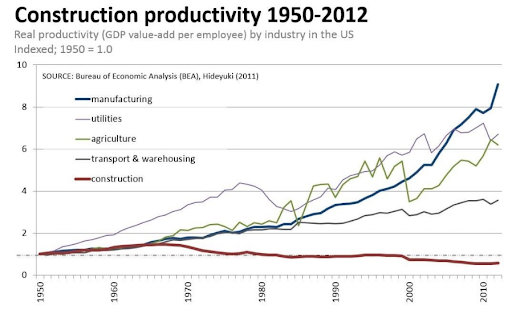
Figure 1 Productivity industry in the period 1950 – 2010
It is therefore clear that there is enormous room for improvement in reducing emissions in the construction industry by increasing its productivity, and the key to this increase could, as in most other industries, be in digitalization. The construction industry, along with a lack of productivity, is also one of the least digitized industries. The technologies that offer the most room for improvement according to a BCG survey are shown in Figure 2, and each of them is associated with digitalization to a greater or lesser extent. Given that the creation of a quality database is a prerequisite for successful digitalization, this article will deal with the topic of creating such databases through implementation of the Building Information Modelling methodology, listed in the figure below under number 10.

Figure 2 Technologies that promise in the construction industry
What is BIM?
By definition, BIM is not (just) a technology. BIM is an information management methodology. This methodology is composed of processes and standards that are supported by technological solutions. BIM is making it possible making an information-rich model. This information may or may not be geometric in nature. BIM models can also include time and cost data in addition to standard three-dimensional geometry, as well as all other metadata needed at various stages of building maintenance, such as data on warranties, services, etc.
History of BIM
The history of BIM technology goes back to the 70s, and already in 1977 the GLIDE computer tool showed most of the characteristics of modern BIM tools. The cost and weak processing power of the computers of the time stopped wider acceptance of these tools and led to the expansion of slightly less demanding and simpler 2D tools. The greatest credit for the development of BIM tools, however, have two Europeans, Leonid Raiz and Gabor Bojar, the developers of Revit and ArhiCAD, which are among the most used BIM tools today. Arhicad was the first BIM tool available on a personal computer. The first version of Revit was released in 2000, and the company that developed the tool (Charles River Software) was sold to Autodesk in 2002. After that, developments continued, with very important ones being the possibility of real – time cooperation of various professions with the development of the so-called workset concept.
Basic concepts of BIM methodology
The basic concepts of BIM are easiest to summarize in three words starting with letter C: communication, coordination and collaboration. The technology allows the creation of processes for faster communication among all participants in the construction process. This results in improved coordination, which necessarily leads to better cooperation.
A quality BIM project should begin by establishing processes to be followed as well as exchange information requirements (EIR) according to the ISO19650 standard. EIR is produced on the client’s side and specifies the requirements on the quantity and quality of information that project participants must deliver. Project participants respond to these requests with a document (BIM Execution Plan, BEP) defining how they plan to meet these requirements. BEP defines everything from the frequency of information exchange and meetings, to technological solutions and exchange formats to be used. All information exchange should take place through a Common Data Environment (CDE)
Each discipline then creates its own information model through the design process, and coordination takes place by assembling these individual models into a single, coordination model. The design and coordination process is iterative and takes place until a satisfactory level of model development is achieved according to the scope of work defined in the mentioned documents (EIR, BEP). What happens next with this information model depends primarily on the method of construction of the entire project, considering that such a model can be used for procurement, tendering and construction and facility management.
Advantages of BIM approach
Put simply, BIM is a methodology that helps all project participants get the right information in the right place at the right time. The value of information depends on several parameters, shown in Figure 3 along with an illustrative comparison of standard 2D and BIM information values.
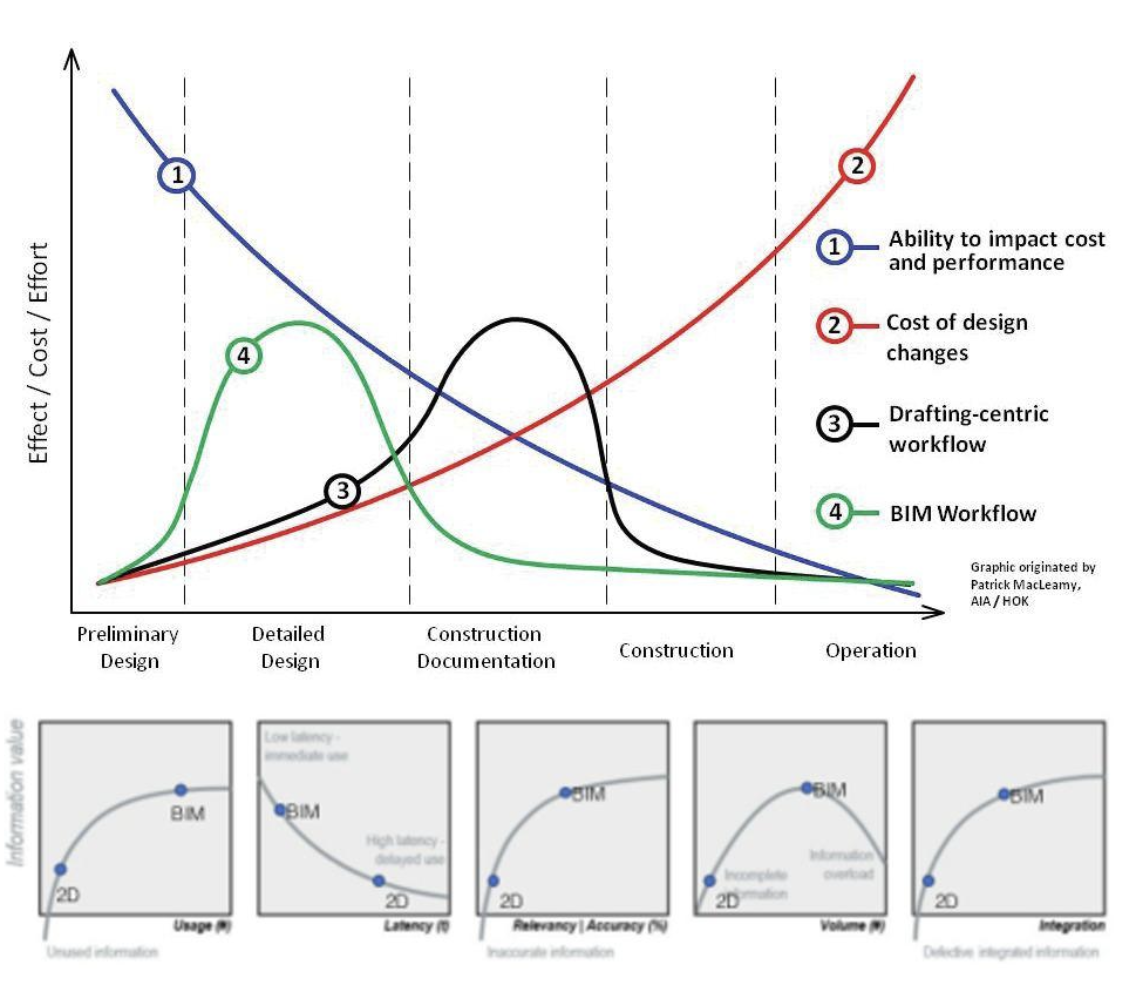
Figure 3 MacLeamy curve (above) and illustration of information values depending on various parameters (below)
In practice, proper use of information means that at an earlier stage of the project , when the possibility of impacting the project is higher and the cost of a particular change is lower, the project can be analyzed in more detail from the aspect of all involved professions, which leads to better decisions that can prevent potentially large and expensive problems (e.g. the appearance of collisions in building systems) during the execution itself. The technology also enables iterative analysis of important properties of the designed object, energy simulations, acoustics, light studies, and many others, depending on the discipline that a particular designer deals with. Each of these analyses can create a multitude of different solutions with detailed data on each of them. This serves as a basis for designers to work together and decide on the best solution. Perhaps most importantly, a quality BIM model can serve as a basis for better assessment of the amount of materials and work on the project and optimization of construction organization.
At the very end of construction, the traditional handover with a pile of paper documents can be replaced by a handover in the form of a model that is verified after the completion of construction (as-built model).” Such a model is also a database and by searching it you can get data on the necessary services for the operating systems of the building. In addition, by installing the sensor and pairing it with the model, a digital twin can be created. Such a digital twin initially monitors the operation of the building systems and informs the user if unusual phenomena occur. At a later stage, the digital twin could use the collected data to identify problems, predict future scenarios, and even optimize the management of an object (e.g., a building, a production facility) itself. (i.e. savings). Autodesk, Microsoft and Amazon introduced their platforms for digital twins. The biggest advantages of the current application of BIM are easiest to see from the survey shown in Figure 5. The survey was conducted as part of a report on the use of BIM in the United Kingdom, which due to the legal obligation of use has become the area with the most developed use of BIM.
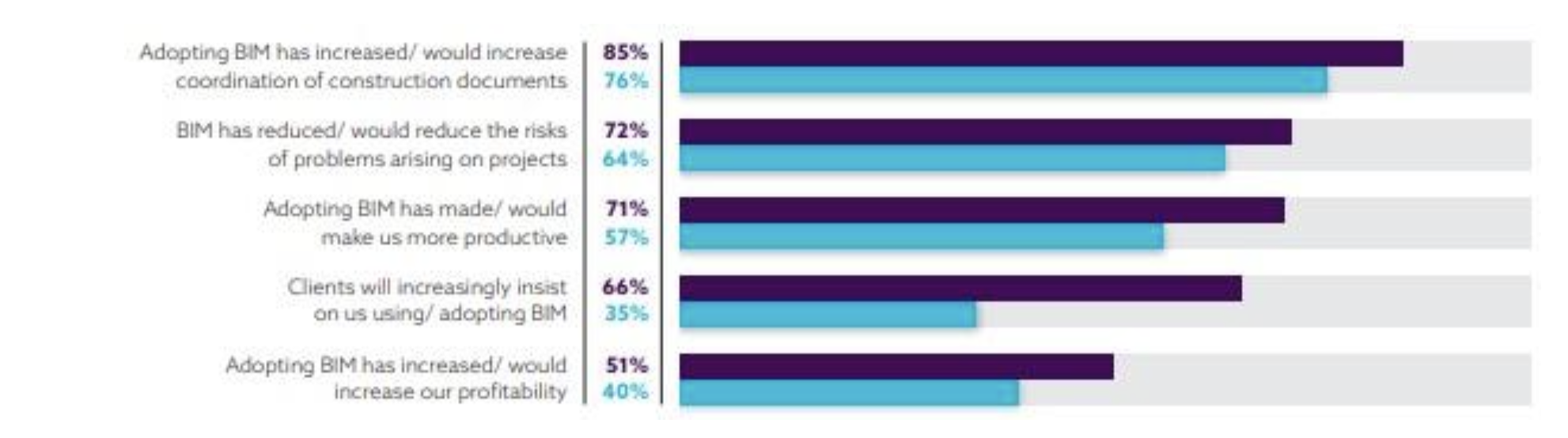
Figure 3 MacLeamy curve (above) and illustration of information values depending on various parameters (below)
Problems in BIM implementation
As good as the advantages from the previous chapter sound, the fact is that we are still quite far from full acceptance and proper use of BIM in the design phase, let alone in the construction and maintenance phases of buildings.
Data from the same report relating to implementation obstacles are shown in Figure 5.
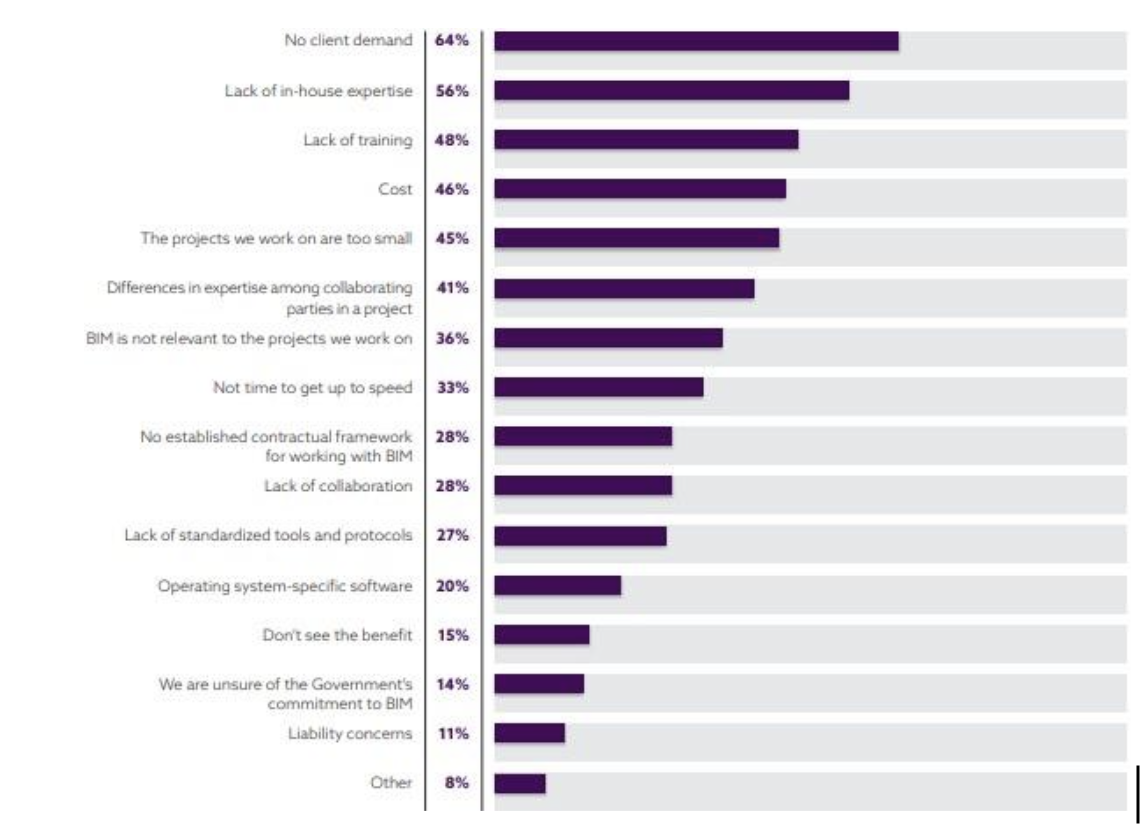
Figure 5 Obstacles to the introduction of BIM
The most significant obstacle could also be described by the “catch 22” concept. Insufficient application of BIM causes insufficient quality models for use in the later stages of the project, and insufficient quality causes BIM not attractive to investors because they cannot take advantage of its functions in full scope, so making BIM models is only an additional cost without a clear picture of the return on investment. This fact, combined with a lack of knowledge and skills and high investment costs, represents a significant obstacle to the full implementation of BIM. When we add the fact that this survey was conducted in a market that is significantly ahead of the Croatian one, it is clear that a lot of work and time is needed for the digitalization of the construction industry in our market to occur. Nevertheless, although this is a very challenging undertaking, due to the enormous potential that this digitalization offers, it is also a great opportunity to create added value through savings and creating new jobs.
The spread of BIM in a particular country or region is usually explained in three main ways, bottom-up (the main impulse comes from small “players”, and the use itself is not regulated in any way), middle – out (the main actors are large companies that serve as intermediaries between government bodies and smaller ones), and the one that could be said showed the best results, top – down, in which the main impulse comes from public bodies that actually condition participation in a project using BIM technology. The largest and most complex projects are usually funded by public authorities, and such projects very often suffer from budget breaks and delays. Due to better information control, BIM has proven to be a better way of monitoring the project in all its phases. Guided by this idea, more and more countries are opting for the mandatory use of BIM methodology when competing for facilities financed with public money.
Legal obligation to use BIM
The country that first introduced the obligation to use BIM for public projects is Denmark, back in 2007. Over time, the culture of use has also spread to projects outside the public sector, so in 2016, 78% of Danish companies used BIM to a greater or lesser extent. Of these, 85% believe that BIM brings added value to the construction site, and 30% of design models are handed over to building managers, which shows that the use of BIM in the building maintenance process is also growing.
The UK is currenlty leading public involment in BIM implementation. Their government presented a strategy in 2011 for the construction sector that included a set of measures that should reduce construction costs by 20%. Among other things, it is stipulated that from 2016, digitization of all documents, including the 3D BIM model, will be required as a minimum. This implementation process has produced a large amount of guidelines and standards, some of which have been adapted to become part of international norms.
Going down south in Europe, the situation is somewhat bleaker, but the direction of movement is expressed in the direction of introducing the obligation. Germany is at the end of 2021. She presented a BIM Masterplan in which it envisages the introduction of a commitment in several steps that should result in the obligation to use BIM for federal government buildings from 2025. Italy in 2014. She set deadlines that she was pushing because the maturity of the industry is not at the required level, so the current target is also 2025. In neighboring Slovenia, things are moving somewhat faster, so the BIM is included in the new construction law, and from January 1, 2024, the obligation comes into force according to which all buildings financed with public money will have to be made in accordance with the BIM methodology, and other buildings will have to have a digital model of the exterior of the building, which will be a condition for obtaining a building permit through the new electronic platform eGraditev.
As far as Croatia is concerned, the situation is quite undefined and left to market developments. Survey conducted during 2017. In 2011, it showed that BIM is used by 25% of designers and only 4% of contractors. What is even more troubling is that these are mostly architectural offices with some construction, while mechanical and electrical projects are practically absent. The situation has changed somewhat for the better, but certainly not drastically, and one of the reasons for this is the lack of strategy, cooperation between industry, educational institutions and public bodies in order to prepare for the changes that are unquestionably waiting for us. The first indications of movement were shown by the tender for the reconstruction of KBC Rebro, because the condition of the tender was the submission of documentation made using BIM. Also, the activity of individual formal or less formal associations (e.g. Center for Digital Construction of Croatia) gives hope that things are still moving in a positive direction.